


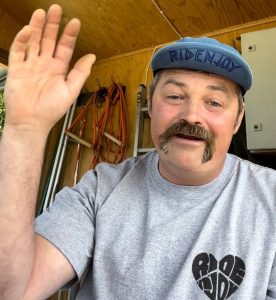
Article written by Michael Meyer
Owner, Ridenjoy Wake Park
A perspective from more than 20 years on the water
For many people, wakeboarding looks like an adrenaline sport. But after more than two decades of riding and operating a wake park, I’ve come to see something much deeper.
Every season, we watch people arrive stressed, tired, uncertain, or simply curious. Many leave with a completely different energy. They smile more. They stand taller. They discover abilities they didn’t know they had.
This made me wonder: could wakeboarding offer benefits that go far beyond recreation?
To explore this question, I reviewed scientific literature on outdoor sports, blue-space environments, psychology, and physical activity, while reflecting on thousands of hours spent coaching and observing riders of all ages and abilities.
The results were fascinating.
More than just a sport
For many people, wakeboarding looks like an extreme sport reserved for young athletes chasing tricks and adrenaline. After more than 20 years in the sport and operating a wake park, I’ve come to see something very different.
I’ve watched thousands of people step onto a wakeboard for the first time. They arrive stressed from work, distracted by daily problems, or unsure whether they can even stand up on the board. An hour later, many leave smiling, energized, and noticeably more confident.
This transformation raises an interesting question:
Could wakeboarding be one of the most complete forms of exercise available today?
Research from sports science, environmental psychology, and outdoor recreation suggests the answer may be yes.
A full-body workout without feeling like exercise
One of the biggest differences between wakeboarding and traditional gym training is that your body works as a complete system.
In the gym, exercises often isolate individual muscles. You might train your back, shoulders, legs, or core separately.
Wakeboarding is different.
The moment you start riding, your body begins coordinating multiple muscle groups simultaneously. The long muscles of the back, the shoulder girdle, the core, the legs, and the stabilizing muscles around the joints all work together to keep you balanced and in control.
This continuous engagement helps develop:
- Functional strength
- Core stability
- Better posture
- Balance and coordination
- Muscular endurance
The muscles along the spine and around the shoulders are particularly active. Over time, many riders develop improved posture and greater body awareness simply because maintaining an efficient riding position requires proper alignment.
Training balance in a way the gym can’t
Water never stays still.
Unlike standing on solid ground, wakeboarders constantly react to small changes in the water surface, cable tension, and body position.
Every second requires subtle adjustments.
This trains proprioception—the body’s ability to sense its position in space—which is essential for balance, movement efficiency, and injury prevention.
When riders begin jumping and performing tricks, another layer is added: acrobatics.
Rotations, grabs, and aerial maneuvers challenge spatial awareness and coordination in ways that few conventional fitness activities can match.
The mental benefits of being on the water
Perhaps the most remarkable benefits of wakeboarding are psychological.
Scientists have increasingly studied the concept of “blue space”—natural environments associated with water. Research suggests that spending time near water can reduce stress, improve mood, and support emotional well-being.
Wakeboarding combines these environmental benefits with physical activity.
When you’re riding, there is little room for worrying about emails, deadlines, or everyday stress. Your attention becomes fully focused on the present moment: the water, your body position, and the next movement.
Psychologists call this state flow—a condition of complete immersion in an activity.
Many riders describe wakeboarding as a form of meditation in motion.
Why people keep coming back
Most fitness programs struggle with one major challenge: consistency.
People know exercise is important, but many find it difficult to stay motivated.
Wakeboarding approaches the problem differently.
Instead of exercising because they “should,” people return because they genuinely enjoy it.
Every session offers something new:
- a smoother turn,
- a first jump,
- a new trick,
- or simply a better feeling on the water.
The progression itself becomes rewarding.
This may be one reason why wakeboarding often creates long-lasting participation and strong community connections.
How does wakeboarding compare to other water sports?
| Activity | Strength | Balance | Mental Focus | Social Aspect |
|---|---|---|---|---|
| Wakeboarding | Very High | Very High | Very High | High |
| Swimming | Moderate | Low | Moderate | Low |
| Surfing | High | Very High | Very High | Moderate |
| Paddleboarding | Moderate | High | Moderate | Moderate |
| Kayaking | High | Moderate | Moderate | Moderate |
| Water Skiing | High | High | High | Moderate |
Each sport offers unique benefits, but wakeboarding stands out because it simultaneously develops strength, balance, coordination, and concentration.
Wakeboarding for everyone
One of the most inspiring developments in recent years has been the growth of adaptive wakeboarding.
Using specially designed sit-wake equipment, people with limited mobility can experience many of the same physical and psychological benefits as standing riders.
I’ve personally witnessed how powerful these experiences can be.
Participants often arrive unsure of what they are capable of achieving. After a successful ride, many leave with something much greater than physical exercise: confidence.
This reminds us that wakeboarding is not ultimately about tricks or performance.
It’s about participation, challenge, and personal growth.
More than a sport
After decades in wakeboarding, I’ve come to believe that its greatest value isn’t athletic.
It’s human.
I’ve seen people overcome fear. I’ve seen children discover confidence. I’ve seen adults reconnect with playfulness they thought they had lost years ago.
Some stay in the sport for a lifetime. Others try it once and move on.
But many leave with a sense of accomplishment they didn’t have before they stepped onto the water.
For me, that’s what makes wakeboarding special.
It’s not just exercise.
It’s a unique combination of movement, nature, challenge, community, and personal growth—and perhaps one of the most enjoyable ways to improve both physical and mental well-being.